Saturday, 15 February 2014

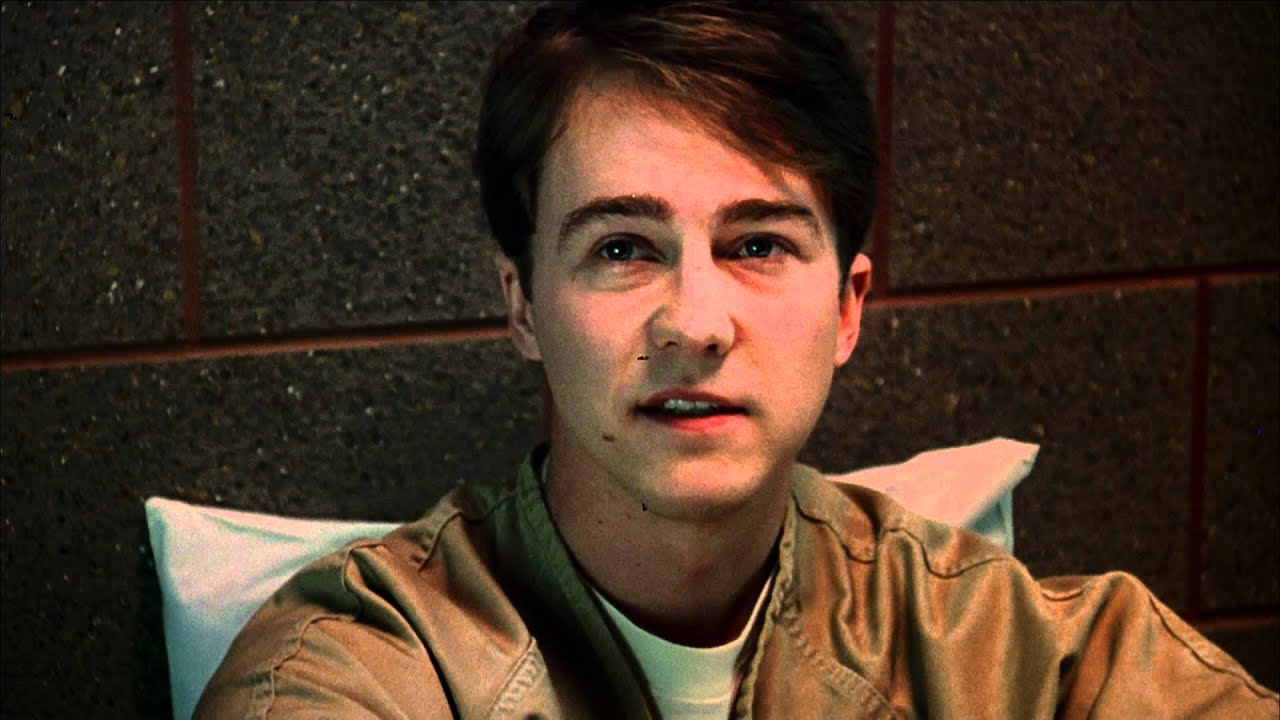
The English Patient (1996) - A Movie Review by Andrew Lawrence


Director: Anthony Minghella
Screenwriter: Anthony Minghella 

Stars: Ralph Fiennes, Kristin Scott Thomas, Juliette Binoche, Willem Dafoe
IMDb page

Unknowingness is a bliss:
When I sat down to watch "The English Patient" for the first time in my life last night, I had no idea what to expect. I had no previous knowledge about the film aside from the fact that it won a bunch of Oscars back in the 90's, I had not seen any of director Anthony Minghella's previous work, and neither had any of the people I know. All I knew about this movie was that it is set before, during and after WWII, and that it stars Ralph Fiennes and Kristin Scott Thomas. Amongst a lot of other factors however, this unknowingness probably is the main reason why The English Patient ended up sweeping me off my feet in such a high fashion as it did. I went into the film unknowingly and expecting nothing, and ended up leaving with everything.

An intertwined structure:
In the opening scene of the movie, we see a small plane being shot down in the deserts of Africa during World War II. We do not know who is flying the plane or who the pilot's fair-haired passenger is, and we do not know why they are being shot at or what they are doing in an african desert in the first place. The film then splits up into two different timelines, one taking place before the war, and one taking place near its end. Ralph Fiennes' character is the center of both these storylines, but whereas he is an astonishingly beautiful but troubled young writer/pilot/cartographer/explorer in the first one, he is a disfigured, crippled and dying shell of a human being who has lost his memory in the second one. As the burnt and crippled version starts regaining his memories through flashbacks, storytelling and dreams, the mystery of the plain crash and Fiennes' lost memories and regrets begin to surface, and as such, both storylines are told at the same time, in an original, interesting and very engaging fashion. 

A true "epic":
This film has a lot of story to tell, and comes in at a whopping 2 hours and 42 minute runtime. It deals with themes such as love, war, exploration, tragedy, borders (both geographical and emotional ones), trauma, insecurity, death, redemption, revenge, despair, history and regret, and manages to deal with all of them in a cohesive and very engrossing manner. The film is like a big mosaic of all these different emotions, themes and traditional storytelling elements told in a very daring and strangely poetic way, and even though it took me about an hour to fully grasp the magnitude of its scope and ambition, The English Patient had my attention right from the beginning, and ended up being one of the most emotionally engaging war movies I have ever seen. It tugged on my heartstrings in a way that I can not remember a film doing before, and for more than just one or two reasons. 

A feast for the eyes:
One of the things that I love the most about this movie, is how beautiful it is to look at. Not only is John Seale's cinematography jaw-droopingly good, but every scene and every set piece is so well crafted and well coloured, that I found taking my eyes off of the screen became an almost impossible task. Another thing I realized whilst watching this film is that 30-something Ralph Fiennes and 30-something Kristin Scott Thomas might just be the most beautiful people that I have ever seen. I mean, wow. Both of them did an amazing job in the film in terms of acting, Thomas especially, but I still have a hard time believing just how gorgeous both of them them look in this movie. Their doomed relationship essentially is the dramatic core of the film, and in my opinion, their flawless outside appearance contrasts their troubled and sad insides in a way that made the characters incredibly reliable and lovable, and their romance is one of the most believable and well-depicted ones I have ever seen on film. 

Not for the faint of heart:
In one of the her very first scenes, Kristin Scott Thomas' character tells her companions one of Herodotus' most famous stories whilst they are sitting around a campfire at night. I found it very fitting that she chose to tell this particular story this early on in the film, because as it turns out, the characters in the movie end up in a situation very similar to the one in Herodotus' story. The entire film actually feels like a Greek tragedy, because as it so often is the case, the war ends up destroying everything that our main characters hold dear. The English Patient is a very sad and very emotionally straining piece of cinema, so for those of you who do not mind having your hearts ripped out a couple of times, it is one of the most effective movies out there. 

A must watch:
When it comes down to it, The English Patient is as much of a must see as any movie that I have ever written about. It has everything that a film needs in my opinion, and I have no doubt that I will be watching it many, many times in the future. Fiennes and Thomas both deliver the best performances of their careers in my opinion, and Willem Dafoe and Juliette Binoche are both very good as well, the clear standout being Kristin Scott Thomas, as I have already mentioned. The film is so grand and so ambitious that attempting to put its beauty and impact into words almost seems completely futile, so I will end this review by recommending anyone who enjoys great visual storytelling to go out and watch it immediately, preferably on Blu-Ray. Kathryn Bigelow's "The Hurt Locker" used to be my favourite war movie, but now that I have seen The English Patient, the hierarchy has been changed.

Thursday, 30 January 2014

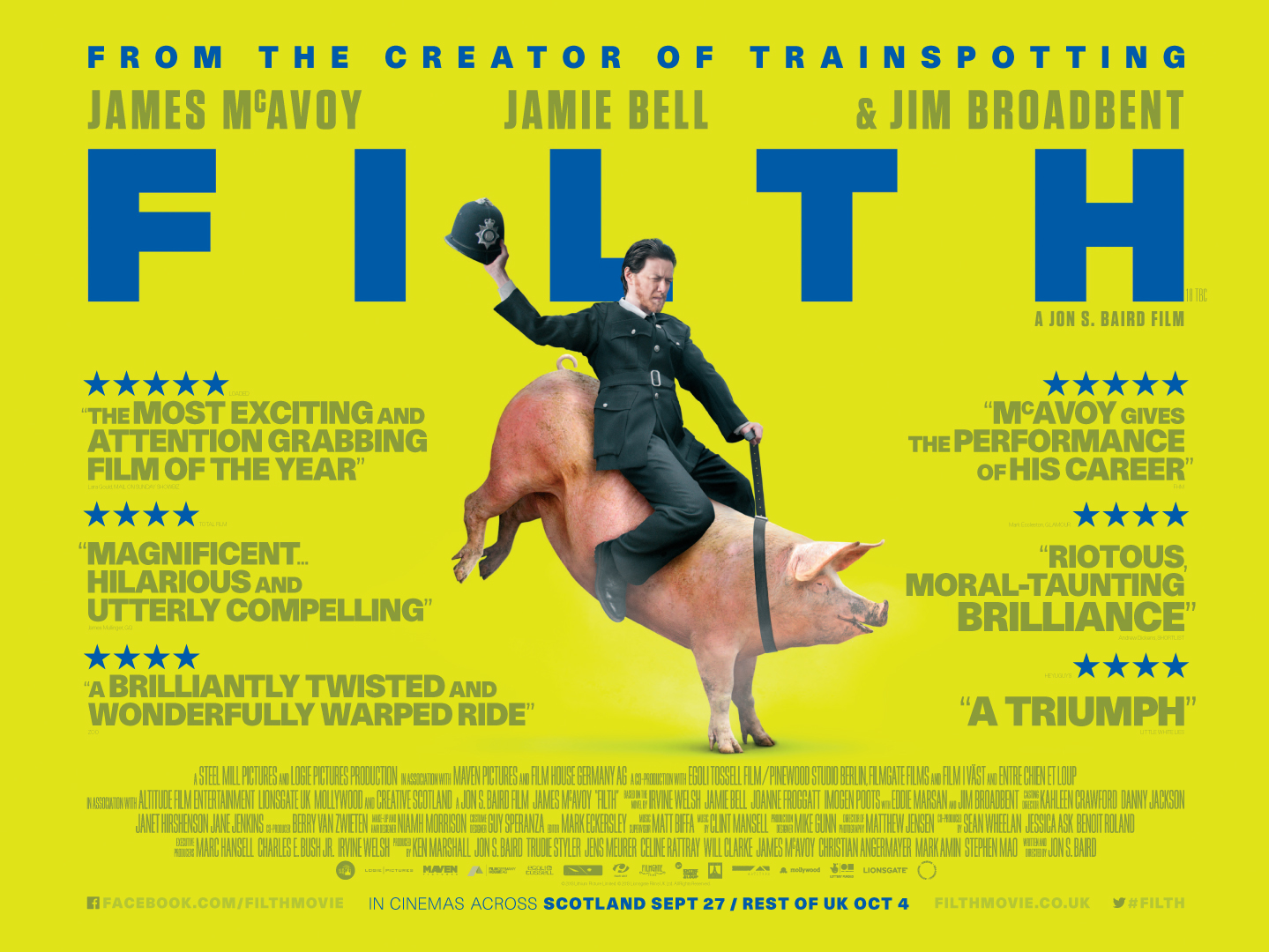
Filth (2013) - A Movie Review by Andrew Lawrence

Director: John S. Baid
Screenwriter: John S. Baid
Stars: James McAvoy, Jamie Bell, Eddie Marsan, Jim Broardbent
Trailer link
IMDb page

A filthy introduction:
John S. Baid's "Filth" is dirty, wretched and out of control right from the get-go. It initially reminded me a lot of Scorsese's "The Wolf of Wall Street", but as it moved into its second hour, I found myself much more engaged in the story than I ever was during "Wolf", the main reason being that this film actually has a sense of self awareness and some interesting characters. The movie is an adaptation of Irvine Welch's novel of the same name, and it stars James McAvoy in the leading role as a twisted, drunken, vile and corrupt Edinburgh cop by the name of Bruce Robertson, who has made it his personal goal in life to be as big of an ass to everyone around him as humanly possible. 

The darkest comedy of 2013:
This film is dark. Not just traditionally dark à la "Fargo", "In Bruges" or "American Beauty", but dark as in "American Psycho" with a twist of "Se7en" and a smidgen of "No Country For Old Men". In other words, do not go into this film expecting it to be light and entertaining, because even though it truly is funny, it also contains some of the most brooding, depressing and jaw dropping scenes I have seen in quite a while. The film is not gory or frightening in traditional horror movie fashion, but chocking and disturbing in a twisted "Requiem for a Dream"/"Trainspotting" heroin junkie kind of way. And yes, in case of Filth, that actually is a good thing.

Hugely stylised, but not just smoke and mirrors:
The thing that I did not like about The Wolf of Wall Street was the way in which it acted as if it had a lot to say, without actually saying anything worth remembering. Scorsese spent three hours trying to make his audience interested in Leonardo DiCaprio's character and failed miserably, and even though James McAvoy's character has a lot in common with Leo's, Filth is a much richer movie in terms of depth, thematic value and pure entertainment, because of the way in which it acknowledges what kind of genre it fits into, and sticks to those roots throughout the film. Sure, the actual story is barely better than mediocre and does hit a few fairly substantial rough patches, but given its blatantly grotesque and warped nature, the film as a whole does not suffer that much because of it. John S. Baid knew his possibilities and limits when he set out to adapt Irvine Welch's novel, and his efforts payed off in my opinion. 

James McAmazing:
Bruce Robertson is in almost every scene in this film, and James McAvoy does an immaculate job of portraying the character and his filthy lifestyle, delivering what I believe to be the pest performance of his young career. Robertson is a very physical and in-your-face type of person, and McAvoy portrays this aspect of his character in a very controlled and confident but also outrageous and explosive manner, which really emphasized his repulsively vulgar and bipolar personality. There is no denying the fact that Bruce is a filthy and disgusting person with no sense of compassion or empathy whatsoever, but his disturbing behaviour and complete disregard of everything decent and morally acceptable is still very interesting to behold. Thanks to a top notch performance and some truly great writing, the character of Bruce Robertson is the single most positively appalling characters put on screen in 2013, and the fact that DiCaprio got nominated for the Oscar over McAvoy makes me both sad and disappointed. 

The verdict:
Despite its average story and slightly unbelievable premise, John S. Baid's Filth is one of the most original movies I have seen in a long long time, as well as one of the funniest and most chocking movies of 2013. I am currently catching up on as many of the most interesting movies from last year as I can, in order come up with as believable a top 10 list of last year's movies as possible, and I would not be surprised if Filth makes that list. It is a grotesque piece of work that is likely to offend a whole bunch people, but in my opinion, this bombastic nature is the thing that makes the film as engaging and entertaining as it is. Those of you who liked The Wolf of Wall Street should go out and watch Filth right away, because in between those two thematically similar films, I think the latter is the better movie by far. 

Sunday, 26 January 2014

Dallas Buyers Club (2013) - A Movie Review by Andrew Lawrence

Director: Jean-Marc Vallée
Screenwriters: Craig Borten, Melisa Wallack 
Stars: Matthed McConaughey, Jared Leto, Jennifer Garner 
Trailer link
IMDb page

The Matthew McConassance: 
After doing "Ghosts of Girlfriends Past" in 2009, Matthew McConaughey took a break from acting. He had been making romantic comedies almost exclusively up until then, and was suffering from one of the most severe cases of typecasting syndrome in history, playing the typical good looking playboy in every movie he ever appeared in. The native Texan seemed determined to break this curse when he eventually returned to the screen in 2011, and after turning in a string of great performances in alternative low budget films such as Bernie, Killer Joe, Magic Mike and Mud, McConaughey quickly became on of the hottest American actors working today, landing leading roles in 2014's "Interstellar", the upcoming Christopher Nolan film, and one of 2013's leading Oscar contenders, Jean-Marc Vallée's long awaited Dallas Buyers Club. McConaughey seems to be unstoppable at the moment, and if you were to trust most critiques and audiences, his performance in this movie is the best he has ever given. 

A most troublesome decade:
Dallas Buyers Club had a long journey to the silver screen, with actors such as Woody Harrelson, Ryan Gosling and Brad Pitt attached to it, before Matthew McConaughey finally was able to get it off the ground by financing parts of the production himself. The film takes place in 1985, where a homophobic trailer trash-redneck by the name of Ron Woodroof is diagnosed with the HIV virus during the AIDS epidemic of the 1980's. No one knew anything about the virus back in 1985, and when Ron learns that the most effective drugs have not yet been approved for distribution in the US, his personal struggle to survive evolves into a full blown war against the pharmaceutical corporations and the doctors who are prescribing dangerous meds to sick Americans. Not only does Woodroof come up with a clever way of getting the right drugs to the people who desperately need them, but his predicament also serves as a catalyst to a personal transformation that changes his perception of life completely. 

Come aboard the Oscar-wagon!:
Given the humanistic and historical nature of the film, Dallas Buyers Club was destined to get a lot of awards consideration even before it premiered at the Toronto Film Festival in early September. McConaughey and Jared Leto lost a lot of weight in order to portray their AIDS-smitten characters as truthfully as possible, the film makes good use of the classic "bad person turns into a better person though trials and tribulations"-recipe, and it deals with a piece of American history that had a lot of impact on the way things work today. That being said tough, Dallas Buyers Club actually has a lot to offer in terms of storytelling and artistic value, and thanks to some great editing and genuinely engaging performances, it manages to break the common "Oscar bait"-stereotype, and thus becomes more than an excuse for McConaughey and Leto to win some flashy statues. 

The man in the middle:
Anyone who follows the awards race at least somewhat actively, will know that Matthew McConaughey is the current favourite to win this year's Oscar for best performance by an actor in a leading role. I have not seen all of the best movies from 2013 yet, but based on what I saw in Dallas Buyers Club, it would come as a surprise to me if Matt M. does not take home the coveted statue. He is more than just unrecognizable in this movie, and even though I personally am getting a bit tired of his characteristic southern mannerisms, his performance as Ron Woodroof is very impressive, and he manages to make the character both appalling and engaging at the same time. I personally think his performance in Ben Nichols' Mud is slightly better, but him winning the Oscar for Dallas Buyers Club still would not be a bad thing in my opinion. 

A double-edge sword of editing:
One of the things that elevated this film from "good" to "very good" for me, is the way in which some the scenes are edited. Especially the first 45 minutes felt very snappy and engaging in my opinion, because instead of using long expositional chunks of dialogue to propel the story he was trying to tell, the director, who also co-edited the film, chose to use facial expressions and quick cuts in order to explain what happens next. I absolutely love when movies pull this off effectively, and Dallas Buyers Club does it very very well. Jean-Marc Vallée and Martin Pensa did get an Oscar nod for best editing, and had the middle portion of the film not suffered from some tonal inconsistencies and a few fairly repetitive scenes, I think they would have been the front runners in this category. As it is the case with all of the other technical awards however, "Gravity" probably will end up taking it home instead. 

A very solid over all product: 
In my opinion, Dallas Buyers Club is a very good movie with some very good central performances, that could have been even better if its budget had been a little more generous. A significant part of the the middle of the film did feel repetitive and a bit off kilter in my opinion, and I was not surprised to learn that the movie was shot in just 27 days on a budget of 4,5 million dollars, often using hand held cameras and natural lighting. This film is a passion project for the director and most of the main cast; a fact that clearly comes to show in some of its more emotional scenes, and I respect them for creating such a good movie with what little money and time they had on their hands. Dallas Buyers Club is just short of being one of my favourite films of 2013, but it is still one heck of a movie that I would recommend to just about anyone who enjoys good movies and incredible acting. 

Monday, 13 January 2014

The Wolf of Wall Street (2013) - A Movie Review by Andrew Lawrence


Director: Martin Scorsese 
Screenwriter: Terence winter
Stars: Leonardo DiCaprio, Jonah Hill, Margot Robbie, Matthew McConaughey, Kyle Chandler
Trailer link
IMDb page


Hello problem, what seems to be the officer?:
For me personally, "The Wolf of Wall Street" is the single most outrageous and over the top depiction of greed and capitalism I have ever seen. In a scene that serves as a pretty good indicator as to what we have in store, Leonardo DeCaprios's character is seen blowing cocaine up a prostitute's ass just a few minutes into the movie, and from then on out, the movie basically evolved into a combination of "American Pie" and "Wall Street" on steroids. In other words: Scorsese's latest collaboration with Leonardo DiCaprio is a three hour rampaging beast of a movie with huge amounts of nudity, drugs, money and champaign, and very low amounts of moral, manners and plot.

Greed is good?:
The Wolf of Wall Street is based on the real life experiences of Jordan Belfort, who was one of the most successful and most deceitful stockbrokers in New York during the 1980's and 1990's. Belfort is portrayed by Leonardo DiCaprio, and as the audience follows him on his journey from 22-year-old college graduate to one of the richest men on Wall Street, we get a somewhat blurred insight into the mindset of some the most greedy and morally bankrupt people who have ever walked the face of the earth. Leo and Scorsese have said in interviews that one their goals with the movie was to show how greed and extreme cases of materialism can be both intoxicating and blinding, in an attempt to draw a parallel to the financial situation of today. However, saying that a movie has a message and a moral is easy enough, but actually getting those points across to the audience is an entire different story. 

Poetic injustice:
In the movie as well as well as real life, Jordan Belfort and his colleague Donnie Azoff (who is portrayed by Jonah Hill in the film), were a couple of grade A douchebags. Some film critiques have been complaining about the lack of real punishment that they and a lot of the other Wall Street guys in this film receive for their heinous acts towards the global economy, and Scorsese's choice not to show how the average working  man was affected by and punished for their greedy behavior has also been a topic of controversy. To me though, this isolated depiction of the luxurious life on the top of the mountain actually worked quite well, because of the way in which it showed how little these guys cared about the outside world. All we see is drugs, parties, prostitutes, mansions, yachts, helicopters and Armani suits, because according to the main characters, those things were the only parts of life that really mattered. 

Three laughs in as many hours:
As of 13.1-14, The Wolf of Wall Street has a rating of 8,7 on IMDb, and a lot people are claiming that it is the absolute best movie of 2013, mainly because of how "outrageously hilarious" it is. I am not one those people. Sure, there are at least three genuinely funny laugh out loud moments in the film, but that is just about it. The drug-infused hard partying nature of the first tho thirds of the movie got stale after thirty minutes in my opinion, and whilst I was sitting there in the cinema with my arms crossed feeling like an old boring man, the rest of the audience just kept on barfing with laughter. I do admit that the air-plane scene (hilfe!) and the cerebral palsy sequence hit home with me in a big way, but saying that scenes like these are what makes The Wolf of Wall Street the best movie of 2013 is unheard of in my opinion. I did not find this film nearly as entertaining as most people give it credit for, and for a three hour movie that relies entirely on mindless high octane humor, that is not exactly a good thing. 

A thematically indecisive mess:
As if being way too long and not succeeding very well in its main objective was not enough, I still have not discussed my biggest problem with Scorsese's latest picture. I absolutely love Taxi Driver, Goodfellas, The Departed, Shutter Island and Gangs of New York, but the familiar sense of depth, meaning, care and importance that all of these great Scorsese movies have in common is nowhere to be found in The Wolf of Wall Street. Things that we are supposed to care about begin to take place in the last third of the movie, but because of the outrageous and completely uncontrolled ferocity of the previous acts, I had absolutely no sympathy for any of the main characters, and therefore could not have cared less about what was going to happen to them. The problem is not that Belfort and the rest of the characters were a bunch of ignorant assholes, but that they were so cartoonishly portrayed that they did not feel like human beings at all. The fact that the movie had spend so much time acting like an amped up episode of America Gone Wild resulted in me being utterly indifferent when I was actually supposed to be emotionally engaged, and a few of the last scenes felt especially shoehorned and thematically misplaced due to this tonal inconstancy. Opting for a grounded finale just is not the way to go when you have spent 150 minutes trying to do something entirely different. 

In conclusion:
For a movie that is as long as this one is, The Wolf of Wall Street had surprisingly little to say. Its incredibly loud and hard partying nature is sure to attract a lot of teenagers and young adults tot he theaters, and the infamous Leonardo DiCaprio circle jerk is destined to reach even higher heights from now on. Scorsese's latest film admittedly is a lot of fun at times, but it most certainly was not enough to fill out three hours of screen time, especially when you consider the amount of talent involved. Jonah Hill does nail his East Coast accent very well, but I do not think that DiCaprio deserves all the praise he has been getting at all. Even though he is basically doing what Jim Carrey and Gary Oldman have been for decades in this film (going crazy and being physically hyperactive), people still claim that he delivers one of the best performances of the year, which is more than confusing to me. I do not hate the guy, I just think that he is vastly overrated, and this performance is no exception. When it comes down to it, "overrated" is probably the most fitting way of describing The Wolf of Wall Street as a whole, at least in my humble opinion. Sorry Marty. 

Sunday, 5 January 2014

A History of Violence (2005) - A Movie Review by Andrew Lawrence

Director: David Cronenberg
Screenwriter: Josh Olsen
Stars: Viggo Mortensen, Maria Bello, John Hurt, Ed Harris
Trailer link
IMDb page

Hype or die:
As a film buff who has heard a lot of great things about David Cronenberg but never actually seen any of his films, my expectations for "A History of Violence" were higher than I am happy to admit. Hype, no matter if it is negative or positive, is often one of the main reasons why some movies completely miss the mark for me, and in case of this film, I half expected it to be one of the best movies I was ever going to see. On all the movie forums, websites, podcasts and youtube channels I frequently go to,  Cronenberg is praised as one of the very best existentialistic filmmakers out there, and one of the most thematically talented directors as well. On top of that, I have heard film critiques say that Viggo Mortensen's performance in this particular film is on par with Marlon Brando's performance in "On the Waterfront" and Robert De Niro's performance in "Taxi Driver". With all this taken into account, it is pretty safe to say that my expectations for A History of Violence were completely off the charts. 

The american dream gone wrong:
Mortensen's character, Tom Stall, is a gentle and friendly restaurant owner who lives in a small american town with his wife and two kids. He works hard to support his loving family through honest labour, he is well known and respected in the local community, and he generally seems to have everything going for him. Sadly, this peace is broken when two criminals just happen to drop by his restaurant one night. The robbers threaten to kill one of Tom's employees, to which he responds by shooting both of them in an act of self defense. To his own distaste, this incident turns him into a local hero. No matter how hard he tries to avoid talking about the event, the media will not let his story rest, and he ends up becoming a true overnight sensation. This attention draws all kinds of people to Tom's restaurant from all over the country, and when one particular person with ties to his past shows up and claims that our protagonist is not who he says he is, his entire way of life comes very close to collapsing into a chaos of blood, murder and deceit. 

Expectation is the root of all heartache:
In spite of my high hopes for the movie and huge respect for Viggo Mortensen as an actor, A History of Violence immediately triggered a bad nerve for me. I got a feeling that I was not going to like where it was going as soon as Tom's daughter showed up on screen, and it sadly did not take long before this suspicion was fully confirmed. Given all the good things I had heard prior to watching it, I was complete taken aback by the (in my opinion) sloppy  and almost amateurish dialogue and the beyond generic course of storytelling that this movie features, and this feeling of unprofessionalism and incompleteness stayed with me for the entirety of the movie's running time. I know that this is not the popular opinion about the film, and I am aware that I just pissed off a lot Cronenberg fans, but I have to be honest here. To me, this movie felt like a cheap made-for-TV movie from beginning to end. 

A less than overwhelming script: 
As mentioned, the dialogue in A History of Violence felt poor from the very beginning. I found it extremely predictable and almost gutwrenchingly generic most of the time, especially when it came to the daughter and the son, and the script in itself felt very cliched and uninspired as a whole. For an example, the film features the single most stereotypical and overdone portrayal of the classic high school bully I have seen in my entire life. No matter how much you might disagree with me on my over all thoughts about the film, I do not think that anyone who has actually seen the movie will disagree with me on this. This guy basically has all the traits of any high school jackass put to film since the invention of the video camera; he is arrogant, he picks on the the protagonist's kid because he defeated him in a game of baseball, he is unintelligent and loud mouthed, he sports the classic combed back hairstyle, he drinks and drives, he humiliates the son in public, and ends up getting his ass kicked because of his bad behaviour. However, the absolute worst thing about this character is that he adds nothing to the plot at all. The only thing he is good for is making the audience do a lot of toe-cringing, face-palming and teeth-clenching.

"I see all this potential, and I see it squandered":
In terms of the actual story of Tom Stall's unwanted fame, his ambiguous past and the trouble that killing those two guys in the restaurant causes him, I actually do see how it could have been interesting. All stories deserve to be told in my opinion, and if done right, even the most generic set of overused plot devices and most uninspired story arcs have the potential to become something worth watching. Nicholas Winding Refn's "Drive", my personal favourite movie of all time, is a brilliant example of this. Had Drive been made by any other director, it might very well have turned into yet another stale, high octane, Jason Statham transporter-type movie, but because of Refn's vision and creativity, it turned into one of the best movies of recent memory instead. The way I see it, A History of Violence had the opportunity to do something similar. As it stands though, it remains utterly common, unimaginative, uninventive and chastised in my opinion, and its waste of potential and disappointing nature is my biggest gripe about it as whole. 

My final thoughts:
Even though I have only talked about the stuff that I did not appreciate, A History of Violence does a have a few slightly redeeming qualities to it. I never found it downright boring, Viggo Mortensen, Maria Bello and John Hurt all portray their characters quite well, and the final scene is actually somewhat intriguing and well structured. As a whole though, there are simply way too many disappointing aspects in this film for me to say that I like it. I do realize that a lot of people absolutely love this movie, and even though I have done my best to conduct my criticism of it in a respectable and unhateful manner, I am well aware that a lot of readers might still find this review offensive. I will not apologize for my point of view, by rest assured that I did not set out to offend anyone by writing this blog post. I wanted to love Cronenberg's A History of violence with all my heart, so much so that I bough it on Blu-Ray without having even seen it, and it pains me to say that I was severely let down. In my opinion, A History of Violence had a lot promise, but ended up completely empty handed due to poor execution and lackluster writing. 

Monday, 23 December 2013

Fruitvale Station (2013) - A Movie Review by Andrew Lawrence

Director: Ryan Coogler
Screenwriter: Ryan Coogler
Stars: Michael B. Jordan, Melonie Diaz, Octavia Spencer 
Trailer link
IMDb page

The beginning of the end:
Fruitvale Station, this year's biggest independent hit, is a brilliant film that showcases the real life events of December 31th 2008, where 22-year-old Oscar Grant met his end at the hands of a young police officer, even though he was completely defenceless and unarmed. In a rare move, Ryan Coogler (the director) opens the movie by showing real life cellphone footage taken by people who were on the scene when Oscar was shot, effectively "spoiling" the end of the movie within 2 minutes. Because of this, the experience of watching Fruitvale Station is shrouded in an atmosphere of tragedy and unfairness almost instantly, making it one of the most heartbreaking and emotionally affecting films of 2013.

A star rises from the ashes: 
After the real life footage has played, the movie opens on the morning of December 31th. Oscar Grant has just woken up, completely unaware that he will be dead in less than 24 hours, and when he is done sending his daughter off to school, we get to see how he interacts with friends, family and colleagues on the last day of his life. Grant is portrayed by Michael B. Jordan, who is best known for his role in 2012's "Chronicle", and his performance in this film is nothing short of starmaking. We are shown through flashbacks that his character has been to jail, cheated on his girlfriend and sold drugs in the past, and that these events now trouble him very deeply. He loves his daughter, his mother and his girlfriend very much, and Jordan portrays his desire to become a better person for their sake so convincingly that you become emotionally attached to him within no more than a couple of scenes. The way I see it, everyone might as well get used to the fact that there is a new Michael Jordan in town as quickly as possible, because this talented young man is here to stay.

What about dramatisation and glorification?:
As with every other movie, book, song or article that is based on true events, it is absolutely vital that you, as a member of the audience, approach Fruitvale Station with a certain amount of scepticism. In this case, the media painted Oscar Grant as a helpless victim of a ruthless act of police brutality, and no matter how convincing the cellphone recordings might look, we all know that the media has a tendency to "slightly" bend the facts of reality in cases like these. Fortunately for the film, Ryan Coogler does a very good job of remaining as neutral as possible when recreating Oscar Grant's final hours. As an example, we are shown very early on how Oscar has been selling drugs for several years in order to stay above water, and that he has a tendency to become angry and hostile when things get a little out of hand. He is not portrayed as an innocent angel who happened to be in the line of fire of a heartless killer, as has previously been the case. 

Also, as with every other biographical movie, a few liberties had to be taken in order to turn real life events into a theatrical experience worth paying to see. Thankfully, this does not mean that the actual recreation of the shooting is portrayed as one sided as it previously has been by the press, or as unrealistically as it might have been. In the climax of the movie, it is clearly visible that the crowd and Oscars friends' verbal and physical reactions to his arrest had a huge impact on the cop that ended up shooting him a few minutes later, and instead of painting the officer as a cold hearted bastard, Coogler portrays him as an insecure rookie, who acted on instinct rather than hatred. No one except the cop himself knows what went through his head at that point in time, and Ryan Coogler's ability to portray the ambiguous nature of the shooting, no matter how unfair and brutal the event might seem to the outside world, is the most impressive and admirable aspect of the entire movie. 

The power of knowledge:
Rather than taking the excitement out of the film, the fact that we all know how it is going to end is one of the Fruitvale Station's strongest assets. It really is kind of hard to explain, but as the film moves closer and closer to that inevitable point in time, you start to grow more and more anxious and more and more fearful of what you know is just about to happen. Instead of fearing the unknown, the things that we do know become what we fear the most, which in turn takes the tension and level of emotional investment in the characters to entirely new, gut wrenching heights. Except for Only God Forgives, I personally have not felt as consumed by a movie all year as I was by this one, and watching it felt more like being on an emotional rollercoaster than in a movie theater. 

In conclusion:
No matter how few specifics we know about the things that took place on January 1th 2008, the death of Oscar Grant was eternally tragic and completely unnecessary. This apparent case of police brutality spawned a huge amount of controversy and debate all over America, and Coogler probably decided to adapt the events into a movie in an attempt to raise even more awareness about the subject. The cop that did the shooting was released from jail after serving just 11 months in prison (source), which should seem like a very short amount of time to just about anyone, no matter what you think happened that night. First time director Ryan Coogler and Michael B. Jordan did an incredible job at adapting the tragic event into a haunting, memorable and thought provoking movie, and Fruitvale Station is definitely my pick for best independent movie of the year so far. 

Friday, 6 December 2013

Upstream Color (2013) - A Movie Review by Andrew Lawrence

Director: Shane Carruth
Screenwriter: Shane Carruth
Stars: Amy Seimetz, Shane Carruth, Andrew Sensenig, Thaigo Martins

A weird exposition: 
If David Cronenberg, Terence Mallick and David Lynch had a lovechild, his name would be Shane Carruth. "Upstream Color" is the followup to "Primer", his debut film from 2004, and it is the trippiest, creepiest, weirdest and most strangely captivating movie I have seen all year. Not only does it deal with themes such as identity theft, existential chaos, parasitic infections and the organics of life, but it also juggles with more normal themes like revenge, love, and the joy of pig farming. In other words; this film is as indie as anything is likely to get, but if you are into that kind of stuff, I can almost certainly promise you that it will be right up your alley. 

A mind-bender in disguise:
Despite being weird in a wide variety of ways, the narrative structure of this film is actually quite simple. We have thirty minutes of buildup where we get to know the main characters and where the main plot devices are introduced, followed by thirty minutes of escalation where things start to pick up and become more exiting, and then finally thirty minutes of confrontation where all the things that took place in the first hour of the film come together to form an ending. This setup might seem very simple, but describing what actually takes place during these three half hour parts without making it sound as if Shane Carruth is absolutely insane, is next to impossible. The story is so unique, so odd and so multi layered that you almost have to see the film for yourself in order to decide what it actually is about, but because this is a film review, I am going to try to summarise it shortly in as understandable a format as possible:

Kris is drugged with some sort of parasite that makes her loose control of her body. She basically becomes a zombie that follows any and all orders given to her without question, and whilst she is in this hypnotized state, she is manipulated into handing everything that she owns over to the guy who drugged her. When she finally snaps out of her coma a few days later with no memory of what has happened, her life slowly starts to fall apart. She has no money, no job, no house and almost no possessions, and consequently falls into a deep depression as a result of having her identity stolen. Kris eventually meets another person who seems to be suffering from some of the same mental problems as  herself, and when the two of them fall for each other and start digging into their seemingly identical pasts, a string of very odd yet strangely enchanting events take place.

95 % style and 5 % substance:
As much as people who have seen it tend to talk about some of the more trippy story elements of the plot, I personally believe that the most interesting thing about Upstream Color is its moods and its atmosphere. There is a subplot in the movie about a guy who basically does nothing but walking around in a forest recording the sounds of the world, and even though I have a very hard time figuring out what it meant to the story, this was the single most artistically satisfying segments I have seen in a movie all year. If you are into these dreamy themes and very loosely explained plots, Upstream Color is just the movie that you have been looking for, but if you prefer carefully composed storylines that make perfect sense and leave you feeling as if you understood every perfectly, you are going to hate it with every fiber of your being. I know that I am not doing a very good job of explaining anything specific about this film at all, but trying to do so would be a waste of effort anyway. It simply is way too floaty. 

The bottom line:
Given the flimsy nature of Upstream Color's content, this blog post is not as much a review of the movie as it is a recommendation for you to go see it. The movie benefits from some of the most beautiful camerawork and sound design I have seen/heard in 2013, and its floaty and almost dreamlike chain of events makes for one of the most engrossing film experiences of the year as well. It is a very artsy film with a very niche target audience however, and it is not very hard to tell that Shane Carruth does not give a damn about normal Hollywood rules and stipulations. I would be lying if I said Upstream Color was an easy movie to watch and keep up with, but no matter how you twist and turn it, it is undeniably one of the most fascinating and unique films of the year, and I have a feeling that we will be talking about for many years to come.  

Thursday, 5 December 2013

Capote (2005) - A Movie Review by Andrew Lawrence

Director: Bennett Miller
Screenwriter: Dan Futterman
Stars: Phillip Seymour Hoffmann, Clifton Collins Jr., Catherine Keener, Chris Cooper

Two great american artists: 
Truman Capote was one of his times most important writers, and Phillip Seymour Hoffman is one of the most gifted actors of our time. Seeing as these two incredible individuals have a lot of visual similarities, it is only fitting that Hoffman got to portray the famous American writer in Bennet Miller's "Capote" from 2005; a portrayal for which he won an Oscar, a golden globe, a Screen Actor's Guild Award, a BAFTA, and pretty much everything else there is to win. 

A new perspective on murder:
Whereas most biopics tend to focus on a large portion of an individual's life, often times even several decades, "Capote" only spans over the couple of years during which Truman Capote did his research for his most famous Novel, "In Cold Blood". The book is based on the brutal murders of an Arkansas family that took place during the late 1940's, but instead of focusing on the actual killings, this film tells the story of how Capote developed a close relationship with one of the murderers during his writing process. This is a very bold approach in my opinion, because as we all know, the easiest thing would have been to tell a story about the brutality of the murderers and the following police investigation that led up to their capture. In this film however, we do not even witness the murderers flee or being captured, but instead get to witness how Capote went about depicting the events in his book. That ladies and gentlemen, is cool.

The main dude: 
One of the many impressive things about this movie is Phillip Seymour Hoffman's portrayal of Truman Capote, especially considering just how gay the famous writer was. Not that there is anything wrong with that, but he had a very distinctive, high pitch way of talking, as well as a very feminine and flamboyant way of carrying himself. I have not seen footage of the real life Capote, so whether or not Hoffmann got the impression right is not for me decide, but he certainly got the gay mannerisms down to a tee. 

Being the main character from whose perspective all the events in the film are seen from, the experiences and personal journey of Truman Capote is the main storyline in this movie. The actual events that take place are not as important as the ways in which Capote reacts to and deals with them, and as such, it is very unfortunate that the film tended to slip a little during these important scenes. Sure, the "Oh, he's an asshole!"-moments and the "Dude, he's really suffering right now..."-incidents are really convincing and individually strong, but it feels as if the things he goes through do not carry over to the following scenes. Things just kind of happen, Hoffman reacts in a striking way, but then in the next scene, he seems to have either forgotten about the event or disregarded it completely. It is entirely possible that this was done entirely on purpose in order to show how indecisive, bipolar, manipulative and egoistical Capote was, but to me, it just seemed a bit inconsistent and random at times.

The supporting dudes and dude'esses:
Even though they come second in line, Hoffman's conversations with the different supporting characters are all very well done and executed almost perfectly as well. Catherine Keener plays Nelle Harper Lee, another famous writer, who wrote How to Kill a Mockingbird at the same time as Capote did his research for In Cold Blood, and being a big fan of her novel and especially the following movie adaption, I  found it very rewarding to watch all the small intertextual references to ”Mockingbird” during this movie. Bruce Greenwood, Mark Pellegrino and Chris Cooper were all very good as well, but the biggest surprise to me was how good Clifton Collins was at portraying the killer that Hoffman’s character develops the strongest emotional connection with. Their conversations were very heartfelt and emotionally convincing, and I found myself making this face during many of their shared scenes, simply because of how riveting both these actors' performances were. 

In conclusion:
All in all, Capote is a very good film with a lot of truly impressive character moments and emotional weight. It is a talking movie in every sense of the word however, so if you decide to watch it in hopes of getting to see the actual Clutter family murders and the ins and outs of the following police investigation, you are going to be in for one hell of a disappointment. The thematical elements are very well handled however, the acting is incredible across the board, the stand out being Philip Seymour Hoffman, and if you go into Capote with curiosity and an open mind, I am almost certain that you are going to enjoy it just as much as I did. 

Wednesday, 4 December 2013

Update #6 - The Start of Something New, or Just the Continuation of Something Rather Old?

Hi!


As my two regular readers will have noticed, I have not been blogging very regularly in the past few months, and there are several reasons as to why that is. Since I really enjoy writing about movies and want to keep on doing it, I have decided to implement a few changes in order to get back into the swing of things again.


1) From now on, my reviews will be shorter, more precise and therefore also more accessable. I have literally been writing novels instead of movie reviews as of late, and even though this has allowed me to go really in-depth with the movies I really enjoy writing about, it also means that writing about those movies that are not that interesting get very tedious very quickly. Also, no matter how hardcore you are, Reading a 2000-word review is not a pleasant thing to do, so this shorter format should allow me to catch the attention of a larger audience and make me able to write more often as well. #DemPageviews.

2) I will not be rating movies any longer. This is the big one. I have honestly come to hate the process of comparing movies to each other in order to find out how many stars X movie "deserves", because as most people who has tried doing this for a long period of time will know, the process ends up completely ruining the fun of watching movies. It has gotten to the point where I start considering what rating I want to give to a film while I am in the process of watching it instead of just enjoying the experience, which in turn makes this whole blogging thing feel more like a job than a hobby. Ratings are a thing of the past now, and that is just how it is going to be. It is for the best. 

3) There will be no more review-subcategories. No more "Classic Movie Reviews" or "Foreign Movie Reviews". A movie is a movie, and a review is a review. 

4) By adding the "Uncut" category, I am going to be expanding my territory a bit. I have often found myself wanting to write about movie related stuff that did not fit into the my two main categories ("Update" or "Film Review"), such as a specific genre, an actor, a director, awards, and so on and so forth. With the "Uncut" segment, I will be free to rant, rave, speculate and ramble as much as want to. Yay. 

Well, I guess that pretty much sums it up this time around. I thank you for taking the time to read this update, and if you liked it and feel a deep desire to stay on top of new reviews, updates and rants about everything else film-related, please feel free to add this site to your RSS feed. 

Cheers 

/Andrew

Tuesday, 26 November 2013

Primal Fear - A Movie Review by Andrew Lawrence

"I don't have to believe you. I don't care if you are innocent. I'm your mother, your father, your priest."

Enduring Genres and an Awkward Confession:

The courtroom drama is one of the oldest film genres in Hollywood, and if done well, it has the potential to force its audience onto the edge of their seats using only snappy dialogue and passionate acting. Safe for westerns and courtroom dramas, I personally have a hard time enjoying old movies that are generally considered all time master pieces, such as the films of Alfred Hitchcock and Orson Welles. I do realise how technically groundbreaking films like Citizen Kane and Rear Window were and how atmospheric and gripping Vertigo and The Third Man must have been back then, but being an 18-year-old kid from the instant-living social media age who grew up with nothing but cartoons and reality TV, most of these older classics just don't appeal to me from an entertainment standpoint. However, there are some old films that do manage to reel me in, especially courtroom dramas such as 12 Angry men and To Kill a Mockingbird, and having just realized this a few months ago, I decided to embark on a one-genre-marathon, and last night that lead me down the road of Primal Fear, a 1996 thriller starring Richard Gere, Edward Norton, Laura Linney and Frances McDormand. 

A Shady City Inhabited by Even Shadier People:
Primal Fear is a bleak and chilly movie that takes place in a murky Chicago littered with crime and corruption; a place where radical hot shot defence attorneys like Martin Vail (Richard Gere) are generally considered to be the dirtiest criminals of them all. Vail is a very smooth and very handsome lawyer with a big talent for making powerful friends and an even bigger talent for getting criminals off the hook, and as such, he is one hell an arrogant and immoral bastard. Vail is always on the border of breaking the confines of the law himself, and the only set of rules he seems to respect is one that he has came of with himself; one that allows him to live with the things he has done in the past as well as the present. Vail is so fond of public attention that he decides to defend a dimwitted 19-year-old boy with a stammer by the name of Aaron Stampler (Edward Norton) in a case about the murder of a beloved archbishop pro bono, simply because the case is as high profile and media influenced as it happens to be. What our arrogant main character fails to realize is that the upcoming trial might not be as simple and straight forward as he initially though it was, and when the disturbing truth slowly starts to show its ugly face, Vail is caught in a sticky web of lies, deceit, money and murder that he can't seem to wrestle himself out of.

The Impressive Ensemble:
This film succeeds in most of the things that it set out to do in my opinion, but it also has a fair amount of minor flaws and obvious conveniences as well. The thing that I liked the most about it also just happens to be the films strongest asset by far, and that is the well rounded and brilliantly acted characters portrayed by Gere, Linney, McDormand and Edward Norton especially. Richard Gere plays the main character in the film, and his turn as Martin Vail is one of the best performances I've ever seen him deliver, mainly because of how many different mindsets he has to master over the course of this movie. This man goes through a wide variety of ups and downs both professionally, personally and morally, and the fact that I was so invested in him as a character, in spite of all his arrogance and pretentiousness, is a testimony not only to Gere's brilliance but to Steve Shagan and Ann Bidermann's fine characterwriting as well. Watching this sleazy lawyer twist his way in and out of Chicago's social layers both figuratively and literally was a real joy to watch, and when he has his big moments of revelation and personal realization, Gere underplays his character's emotions in such way that I found myself feeling both sorry and resentful towards him at the same time. However, as much as the film benefits from Gere's subtle slimeball performance, it is Edward Norton who ends up completely stealing the show in the end. 

His role as Aaron Stampler in Primal Fear is Edward Norton's feature film debut, and it landed him a golden globe statuette and an Oscar nomination for best supporting actor. He was 27 back then. Norton has always been one of my personal favourites, but no matter how many great things I had heard prior to witnessing it myself, I had no idea just how incredible this man already was at such a young age. The character that he portrays in this film is a very disturbed and emotionally scarred young individual who appears to have been caught at the wrong place at the wrong time, and even though the character does suffer from a few script related issues, Norton does an awe-inspiring job with the material that he has been given. I mentioned that Gere’s performance was great because of his ability to display a wide variety of different emotions, but when compared to Norton’s incredible range of facial expressions, voices, body postures and characteristics, Gere looks like a stoned cartoon cardboard cut-out. Aaron Stampler has a condition that forces Norton to play several different roles in the same movie, pretty much identical to the way he went on to do it in Leaves of Grass in 2009, and it is almost surreal how good he is at flipping his character 180 degrees in a matter of seconds in this film. Gere, McDormand and Linney all play vital and well portrayed characters that helped mold this movie into what it is, but none of them come even close to matching the sheer amount of raw talent and range displayed by Edward Norton in his debut role as Aaron Stampler.


Six Star Characters in a Three Star Movie:
In terms of the actual world that Norton, Gere and the rest of cast find themselves in, there sadly is not that much to write home about. In spite of its very well realized characters and some very snappy and occasionally hilarious dialogue, Primal Fear ends up becoming a picture perfect example of how the sum of a lot of great individual things sometimes turn out to be worth a whole lot less than first anticipated. We have all seen the basic premise of the plot done a thousand times before: A shady lawyer/cop/journalist/private investigator takes a job that doesn’t seem that interesting or difficult in the beginning, only to find out that there is a much more sinister reality lurking just beneath the surface, which ends up making him question his own morals and integrity. The way in which Gere’s character shows these inner demons is also rather wooden and uninspired to put it mildly, because instead of coming up with a smart or innovative way of displaying Vail’s declining trust in himself and his methods, someone decided to go the cheap route and add a sub plot about this journalist who is in the middle of writing an article about defence attorneys. The way I see it, this is a blatant excuse to have Vail specifically say the things that the director and the writers wants the audience to think, without having to come up with something that will display it instead. The journalist doesn’t even have more than four or three lines in the entire 130-minute movie, and the sole purpose of his character was to pop up whenever Gere’s character needed a wall to talk to, so that the audience could get to know how he is feeling at specific point in time. This is extremely lazy writing in my opinion, and these specific scenes ended up reducing my over all impression of the movie quite a lot.

Another thing that turned me off about this movie, is the way in which it handles the whole mystery aspect of the thriller genre. I do not mind it when courtroom have a twist or a revelation near the end of the plot in order to throw the audience for a loop, but I do not always think that it is the right way to go either. The shocker in this film actually worked quite effectively and initially had me grinning like a 12-year-old who had just found his first playboy magazine, but the credits had not even started rolling before I was beginning to find several things about it that did not make sense. We are not talking about major things that ruined the entire film or anything of that magnitude, but if I was to watch the movie again, I am pretty sure that I would be able to find several “Well, that just doesn’t make any sense at all!”-moments, especially concerning the character of Aaron Stampler. Some of those do not even require repeat viewings, and there is at least two other rather iffy details about some other characters that I can think of right now, one of them being the alcoholic judge played by Alfre Woodard. The film spends a lot of time specifically showing us how she always has a drink in her hand, both during and in between trials, but it never has any effect on the plot whatsoever. She does not seem the least bit drunk in her behaviour or in her decision making even once throughout the film, and I was left quite puzzled as to why this completely irrelevant detail was added to her character.

The One-man Jury's Final Verdict: 
Even though its story is somewhat campy and unremarkable, Primal Fear is an extremely well acted film that benefits from a whole bunch of trustworthy main characters and a virtual heap of clever and sometimes funny dialogue. It is a great film in terms of pure entertainment value, and even though it hits a few glaring misses and fails to revolutionize its genre in even the slightest way possible, I would recommend anyone who likes a good courtroom drama with great characters and an easily digestible plot to check it out. Norton’s performance alone makes it completely worth it, and as a whole, Primal Fear has earned my seal of approval. (4/6)

Primal Fear IMDb page here
Primal Fear trailer here